Let me tell you about a conversation I had with a CFO at a Sri Lankan conglomerate. Smart woman. Runs a tight ship. She'd just approved a Microsoft Copilot rollout for 200 employees.
"We got a good deal," she told me. "72,000 a year. Worth it for the productivity gains."
I asked her four questions. By the fourth one, she was rethinking the whole deal.
Here are the questions.
Question 1: What Happens When the LKR Drops?
$30 per user per month. That's in US dollars.
For a Sri Lankan enterprise earning revenue in rupees, every Copilot invoice is a forex event. When the LKR weakens against the dollar — and it has, repeatedly — your AI costs go up without any change in service.
Let's do the math:
- At LKR 300/USD: $72,000/yr = LKR 21,600,000/yr
- At LKR 320/USD: $72,000/yr = LKR 23,040,000/yr
- At LKR 350/USD: $72,000/yr = LKR 25,200,000/yr
The difference between 300 and 350 is LKR 3,600,000 per year.
That's not a rounding error. That's a mid-level employee's annual salary.
And you have zero control over it.
Your CFO budgeted for the rupee cost at today's exchange rate. But Microsoft invoices in dollars. Every rupee depreciation is a direct hit to your AI budget — and you can't negotiate with a currency.
The CFO I was talking to hadn't modeled this. Most CFOs don't. They see $30/user and multiply by headcount. They don't model the forex sensitivity because it's "not an IT problem."
It becomes an IT problem very fast when the CFO comes back mid-year and says the AI budget is 15% over because of forex.
Question 2: Do You Know What Happens to Your Data?
This is the question that made her go quiet.
When an employee uses Copilot in Word, Excel, PowerPoint, or Teams, here's what actually happens:
- The employee's prompt (and the data context around it) is sent to Microsoft's Azure cloud.
- Microsoft's AI model processes the query on servers likely located in the US, Europe, or Singapore.
- The response is sent back to the employee's device.
- Microsoft's data processing agreement governs what happens to the data in between.
Now ask yourself: what data is being sent?
- When a financial analyst uses Copilot in Excel to analyze a spreadsheet of client transactions — the client names, account numbers, and transaction amounts go to Microsoft's cloud.
- When an HR manager uses Copilot in Word to draft an employee performance review — the employee's name, performance data, and salary information go to Microsoft's cloud.
- When a lawyer uses Copilot to summarize a contract in Word — the client's name, commercial terms, and confidential clauses go to Microsoft's cloud.
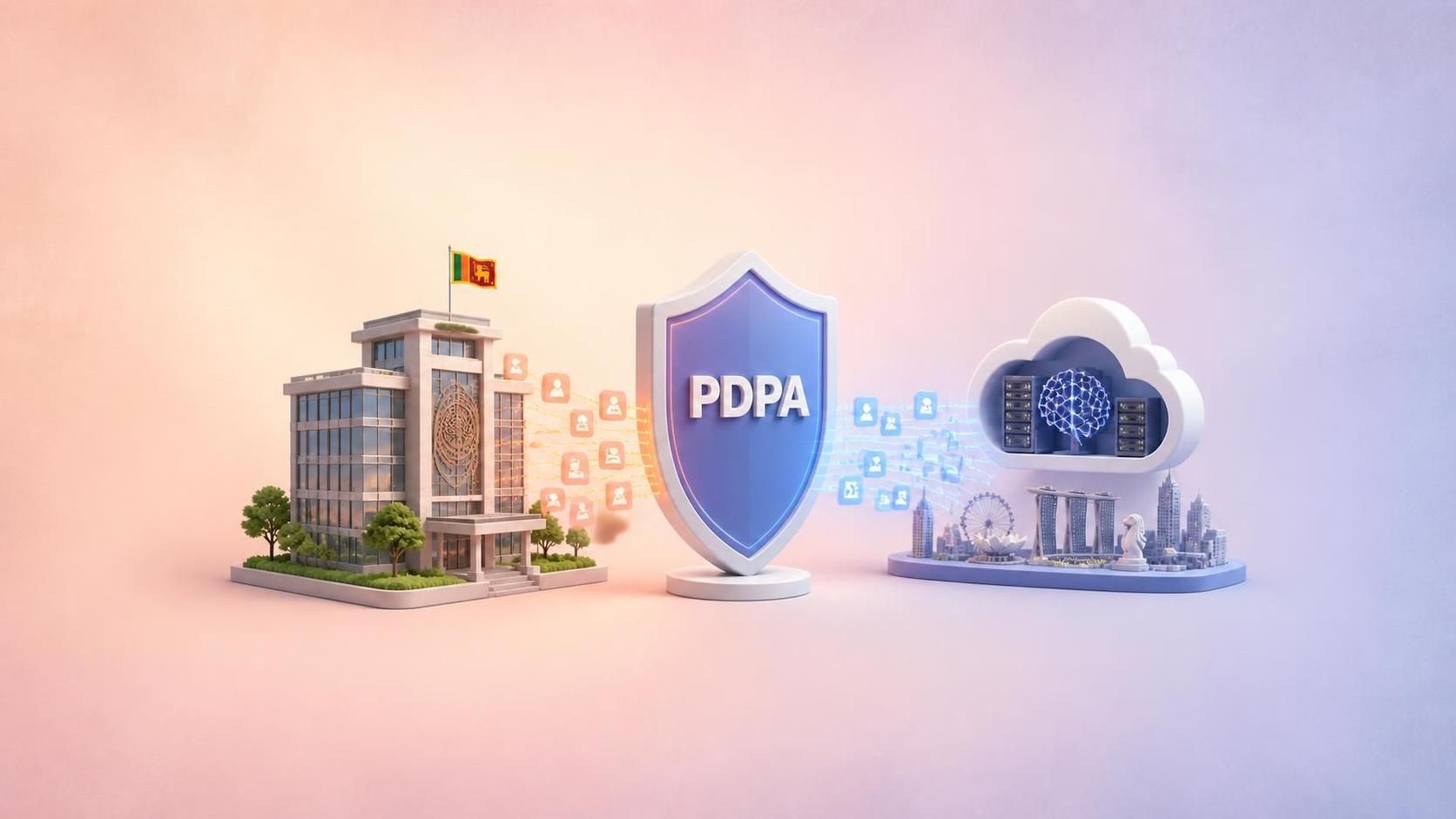
Every one of these is a PDPA event. Personal data is being processed by a third party (Microsoft) on servers outside Sri Lanka.
Now, Microsoft has a data processing agreement. It's designed for GDPR. It includes standard contractual clauses and commitments about data handling.
But here's the question your compliance team needs to answer: Does Microsoft's data processing agreement satisfy Sri Lanka's PDPA requirements for cross-border data transfers?
The honest answer is: nobody knows yet. PDPA's cross-border transfer provisions haven't been fully tested. The regulator hasn't issued specific guidance on whether standard contractual clauses designed for GDPR are sufficient for PDPA.
What we do know is this: if the answer turns out to be "no," every Sri Lankan enterprise using Copilot has a retroactive compliance problem. And "Microsoft told us it was fine" won't be a defense.
Question 3: The Inference Wall — Why $30 Is the Floor, Not the Ceiling
This is the question most enterprises haven't even thought to ask. And it's the one that changes the entire cost equation.
The AI industry has a structural problem. It's called the inference wall.
Here's how it works:
Training an AI model like GPT-4 is a one-time cost. It's enormous — hundreds of millions of dollars — but it happens once. You train the model, and then it's trained.
Inference is different. Inference is what happens every single time a user sends a prompt and gets a response. Every query costs compute. Every response costs money. And inference scales with usage — the more users you have, the more queries they send, the more it costs.
This is the fundamental economics problem that OpenAI, Anthropic, Google, and Microsoft all face:
- Training cost — one-time, fixed, predictable. A US$500M once-and-done hit.
- Inference cost — ongoing, variable, and scales with every query. US$10B+ per year and never stops. OpenAI reportedly spends billions per year on inference; every free ChatGPT query and every Copilot response costs real money.
The math doesn't work at current prices. Something has to give.
What does this mean for your Copilot contract?
- The $30/user price is a market-share play, not a sustainable price. Microsoft is pricing Copilot to acquire users. They're absorbing the inference costs (or passing them through Azure margins) to build market share. This is the classic tech playbook: price low, acquire users, raise prices later.
- The price will go up. It has to. The inference wall means every additional user costs Microsoft more money. At some point, the subsidy ends and prices reflect actual costs. Industry analysts expect AI tool pricing to increase 30-100% over the next 2-3 years as the inference economics become untenable.
- You have no price protection. Microsoft's Copilot agreement doesn't lock in pricing for 5 years. It's annual. When renewal comes, the price will be whatever Microsoft decides. And because your employees have built workflows around Copilot, switching costs are high. You'll pay the increase because the alternative — retraining 200 employees on a new tool — is worse.
The cost curve looks like this (200 users):
- 2026 — current subsidized pricing (market-share pricing)
- 2027 — moderate increase (renewal pressure and usage growth)
- 2028 — sharper increase (inference wall starts to bite)
- 2029 — continued escalation (higher compute and model-serving costs)
- 2030 — potentially 30–35M+ LKR (price increases plus forex volatility)
This does not include forex fluctuations, which may add another 5–15% variability on top. The dotted line is what your CFO budgeted; the actual line is what you'll pay.
The CFO I was talking to had budgeted for a flat $72,000/year. She hadn't modeled price increases. She hadn't modeled forex sensitivity. She hadn't modeled the inference wall.
When I showed her this, she said: "So what's the alternative?"
Good question.
Question 4: What Happens If You Want to Leave?
This is the lock-in question. And it's the one that turns a bad deal into a trap.
Once 200 employees are using Copilot daily, switching costs are enormous:
- Workflow dependency. Employees build habits around Copilot. They expect it in Word, Excel, PowerPoint. Removing it feels like a productivity downgrade — even if the alternative is better.
- Data gravity. Copilot learns from your organization's data patterns over time. The more you use it, the more customized it becomes. Switching means starting from zero.
- Training costs. 200 employees need to learn a new tool. That's weeks of reduced productivity, training sessions, and support tickets.
- Integration complexity. Copilot is embedded in Microsoft 365. If you're a Microsoft shop, it's everywhere. Extracting it means rethinking your entire productivity stack.
- Procurement inertia. Enterprise procurement is slow. Evaluating alternatives, running pilots, getting approvals — it takes 6-12 months minimum. By then, you've renewed for another year.
This is the vendor lock-in trap. It's not contractual — it's operational. You're not locked in by a contract clause. You're locked in by habit, by workflow, by the friction of change.
And the inference wall makes it worse. As Microsoft raises prices (because it must), your switching costs also increase (because more usage = deeper dependency). The longer you wait, the more expensive it becomes to leave.
The lock-in spiral:
- More usage — employees build daily habits around Copilot inside Word, Excel, PowerPoint, and Teams.
- Deeper dependency — workflows, expectations, and internal processes begin to assume Copilot is always available.
- Higher switching costs — leaving requires retraining, migration planning, support, and a temporary productivity dip.
- Less leverage to negotiate — by renewal time, the organization has fewer credible alternatives and less appetite for disruption.
- Pay whatever Microsoft charges — price increases become easier to accept than the operational pain of switching.
Bottom line: this is not a partnership. This is a dependency.
The Real Cost: Adding It Up
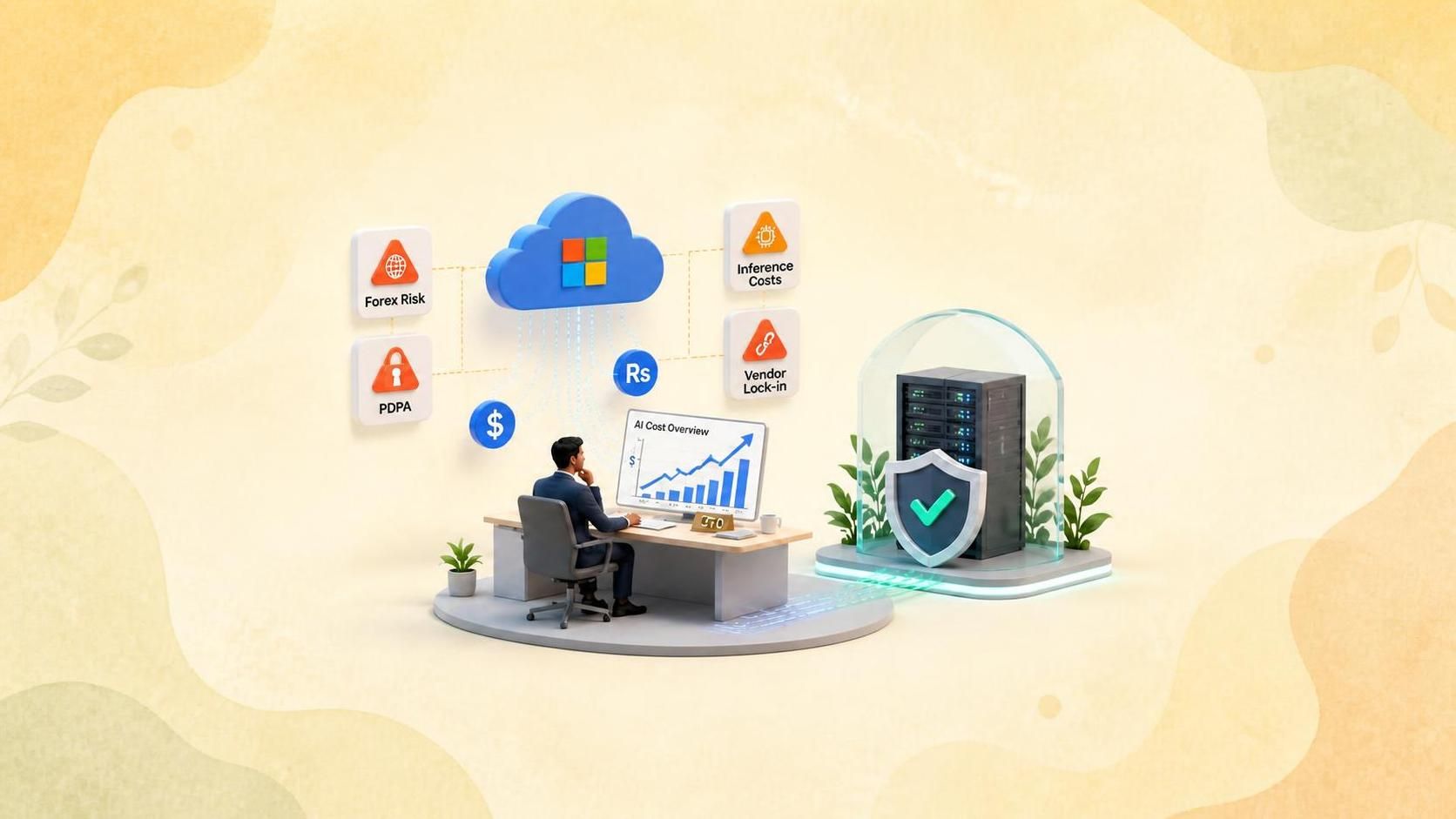
Let's put it all together. Here's what Copilot actually costs a 200-person Sri Lankan enterprise:
- Visible costs — subscription: $72,000/yr (~LKR 21.6M at 300/USD)
- Forex risk — +5–15% annually (~LKR 1–3.2M)
- Inference wall price increases — +10–30% at next renewal (~LKR 2.2–6.5M)
- PDPA compliance exposure — unknown but potentially significant: fines, legal costs, and remediation
- Audit trail gap — manual compliance processes may cost ~LKR 1–2M in staff time
- Lock-in cost — switching costs increase every year you stay
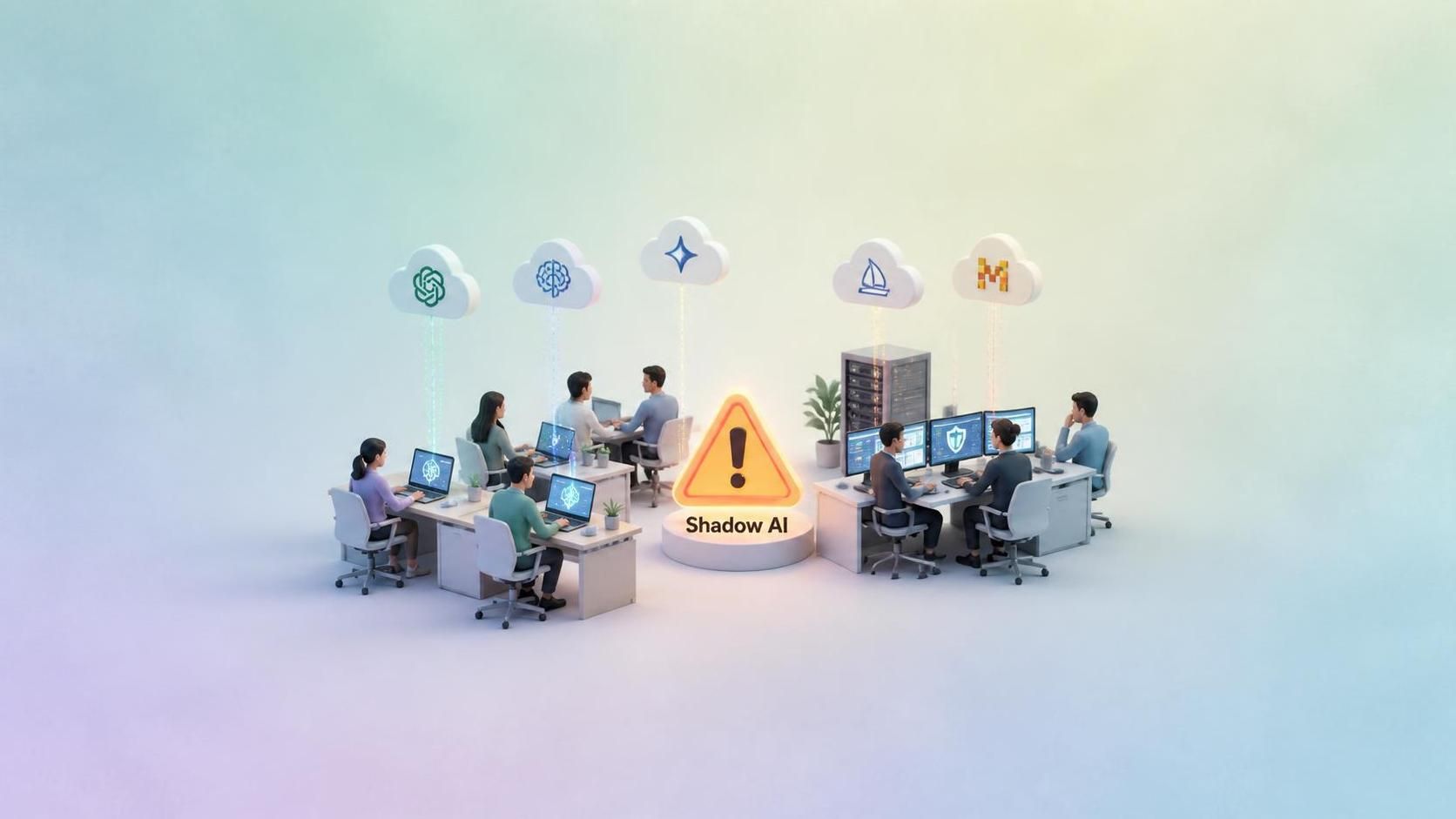
- Shadow AI — employees may still use ChatGPT, Claude, and other tools alongside Copilot
- What you don't get — data residency in Sri Lanka; model flexibility; AI query audit trail; PDPA compliance guarantee; price-increase protection; the ability to switch models as technology evolves
Conservative total cost, Year 1: LKR 21.6M subscription + LKR 2–5M hidden costs = LKR 23.6–26.6M.
Projected cost, Year 3: LKR 28–35M+ depending on forex and price increases.
The Alternative: What Sovereign AI Actually Costs
Now let's compare. A sovereign AI platform — one that runs on your infrastructure or on local servers, keeps data in Sri Lanka, offers multi-model flexibility, and includes audit logging:
- Annual cost — Copilot: $72,000/yr (LKR 21.6M). Sovereign AI: ~$17,500–35,000/yr (LKR 5.3–10.5M).
- Data location — Copilot: US/EU servers. Sovereign AI: Sri Lanka, on-prem or local hosting.
- Model choice — Copilot: Microsoft only. Sovereign AI: OpenAI, Anthropic, Llama, DeepSeek, and others.
- Audit trail — Copilot: limited. Sovereign AI: full logs.
- Forex exposure — Copilot: exposed. Sovereign AI: LKR-denominated or fixed USD.
- Lock-in — Copilot: high. Sovereign AI: none — bring your own key.
- Price risk — Copilot: exposed to the inference wall. Sovereign AI: controlled, because you own the infrastructure.
- PDPA posture — Copilot: uncertain. Sovereign AI: compliant when data never leaves Sri Lanka.
Savings: 50–75% on subscription cost alone, plus reduced forex risk, lock-in, compliance uncertainty, and audit gaps.
The economics are clear. But the economics aren't even the main argument.
The main argument is control.
With Copilot, Microsoft controls your AI infrastructure, your data flows, your pricing, and your compliance exposure. You are a tenant in their building. They set the rent. They set the rules. And the inference wall means the rent is going up.
With sovereign AI, you control your own infrastructure. You choose the model. You keep the data. You set the rules. And because you're not paying someone else's inference markup, the costs are predictable.
The Inference Wall: A Deeper Look
Since this is the argument that most Sri Lankan enterprises haven't heard, let me explain the inference wall in more detail. Because understanding it changes how you evaluate every AI investment.
The basic economics:
Every time someone sends a prompt to an AI model, the model runs a computation. That computation uses GPU (graphics processing unit) time. GPU time costs money — real money, measured in fractions of a cent per query.
For a single query, the cost is tiny. But scale it across millions of users sending dozens of queries per day, and the numbers become staggering.
OpenAI reportedly processes billions of queries per month. Each one costs money. The total inference bill is estimated at billions of dollars per year — and growing.
The problem for OpenAI and Anthropic:
These companies have a structural mismatch. Their revenue comes from subscriptions (fixed monthly fees). Their costs come from inference (variable, usage-based). As usage grows, costs grow faster than revenue.
This is the opposite of a traditional software business, where the marginal cost of serving one more user is near zero. In AI, every additional user costs real money, every query, forever.
- Revenue model — Traditional SaaS: $30/user/month. AI tools: $30/user/month.
- Cost to serve another user — Traditional SaaS: near zero. AI tools: cost per query × queries/month.
- Margin behavior — Traditional SaaS: improves with scale. AI tools: worsens with scale.
- Current margins — Traditional SaaS: often 80%+. AI tools: often 20–30%, sometimes negative.
- Post-inference-wall margins — Traditional SaaS: stable. AI tools: potentially 10–15% unless prices rise significantly.
What this means for you:
The companies selling you AI tools — Microsoft, OpenAI, Anthropic, Google — are all facing the same structural problem. Their costs scale with your usage. Their revenue doesn't (it's fixed per user). The gap between cost and revenue is the inference wall.
They will close that gap. The only question is how:
- Raise prices (most likely — and the most direct impact on your budget)
- Reduce quality (use cheaper models, reduce context windows, limit features)
- Monetize data (use your queries and data for training, advertising, or resale)
- Shift costs to partners (Microsoft pushes inference costs into Azure pricing, which affects your cloud bill even if you don't use Copilot)
None of these are good for your enterprise. All of them are avoidable if you own your AI infrastructure.
The sovereign advantage:
When you run AI on your own infrastructure — or on a locally-hosted platform — you break free from the inference wall economics. You pay for compute directly. You choose cost-efficient models (open-source models like Llama and DeepSeek are dramatically cheaper to run than GPT-4). You control the cost curve.
Instead of paying Microsoft's markup on inference (which includes their margin, their infrastructure costs, and their need to recoup billions in training investment), you pay the raw compute cost. That's the difference between buying a bottle of water at a hotel minibar versus filling a glass from your own tap.
What the CFO Should Have Asked
Going back to the conversation with the CFO. Here's what she should have asked before approving the Copilot deal:
- Forex exposure — What is our cost at LKR 300, 320, 350, and 400 per USD? Build a sensitivity table.
- Renewal pricing — What happens to the price at renewal? Ask for multi-year commitments or budget for a 20–30% increase.
- PDPA compliance — Does Microsoft's data processing agreement satisfy PDPA cross-border transfer requirements?
- Exit strategy — If we want to leave in 12 months, what does it cost? If leaving is difficult, the board should know.
- Local alternatives — Is there a local alternative that gives us more control for less money?
The Bottom Line
Microsoft Copilot is a good product. I'm not here to say it isn't. It does what it promises — it adds AI capabilities to the Microsoft 365 tools your employees already use.
But "good product" and "right choice for your enterprise" are two different things.
For a Sri Lankan enterprise, the real cost of Copilot includes:
- The subscription fee ($30/user/month — visible)
- The forex exposure (5-15% annual variability — invisible until it hits)
- The inference wall (prices will rise — inevitable)
- The PDPA liability (data leaving Sri Lanka — unresolved)
- The lock-in cost (increases every year — compounding)
- The audit gap (no visibility into what data goes where — unquantifiable)
Add it all up, and the real cost isn't $30/user/month. It's significantly more — and it's growing.
The alternative — sovereign AI that keeps data in Sri Lanka, offers model flexibility, includes audit logging, and costs 50-75% less — isn't just a compliance play. It's a financial decision.
The inference wall is real. The forex risk is real. PDPA enforcement is coming. And the enterprises that figure this out before their competitors will have a structural advantage — in cost, in compliance, and in control.
Your CFO should run the numbers. If they're honest about the real cost, the answer is clear.
Want to see what sovereign AI actually costs for your organization? Take our five-minute PDPA AI risk check and get a picture of your exposure.